Why Drought Watch Exists
Every college basketball fan has watched their team go ice cold at the worst possible moment. A three-minute scoring drought in the final eight minutes. A five-possession dry spell that turns a close game into a blowout. A timeout that doesn't help.
But until now, no one was tracking just how often it happens — or what it costs.
Drought Watch is the first platform to systematically track and analyze scoring droughts across all 363 Division I men's basketball teams.
The Journey
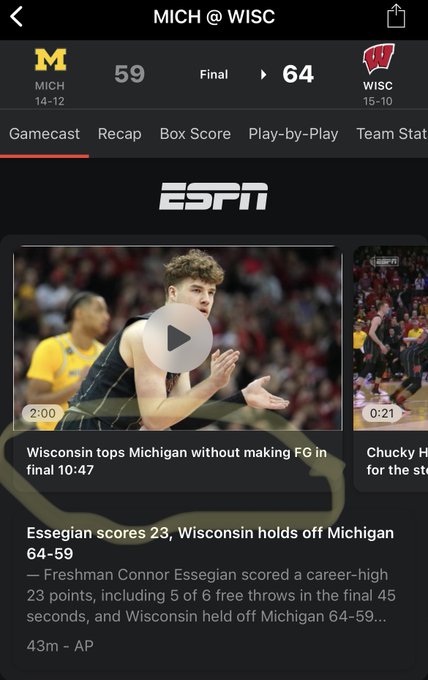
During the 2022 NCAA Tournament, I kept noticing broadcasters flashing scoring drought timers on screen and making a big deal out of them every time. But watching the games, these droughts seemed to happen constantly. Teams go cold. It's basketball. The broadcasts felt like they were over-dramatizing something totally routine.
That skepticism stuck with me. Were scoring droughts actually meaningful, or just part of the game that TV made sound alarming? I decided to find out.
By the 2023 season, I was actively watching for droughts in every game I could catch. I'd see a team go cold for five possessions and wonder: is this normal for them? Do they always struggle mid-half? Is there a pattern here?
Some teams seemed allergic to scoring for entire stretches. 5, 6, 7 minute droughts where elite programs couldn't buy a bucket. I wanted to see the data — how often it happened, which teams were most vulnerable, and whether coaching adjustments actually worked.
The 2024 tournament was a turning point. I watched multiple games where teams completely collapsed during 4-6 minute scoring droughts. These weren't flukes or outliers — they were predictable momentum shifts that derailed championship runs.
That's when I realized this needed to be more than casual observation. Scoring droughts weren't just entertaining TV graphics — they were measurable, recurring events that fundamentally shaped game outcomes. If we could track them systematically, we could finally understand which teams were resilient and which were one cold stretch away from collapse.
After the 2024 tournament, I decided to build a real platform. I pulled 22 seasons of NCAA play-by-play data (2002-2024) and started analyzing. The results were staggering:
2.37 million scoring droughts across 22 seasons
2-3 droughts per game on average (3+ minutes each)
68% loss rate for teams with 4+ minute droughts
27M+ plays analyzed to detect patterns
The patterns were undeniable. Scoring droughts weren't random — they followed predictable timing patterns (mid-half, post-timeout), team tendencies (offensive scheme vulnerabilities), and contextual triggers (momentum swings, defensive adjustments). This was a solvable problem.
Drought Watch is now live, tracking every scoring drought in real-time across all D1 games this season. We've analyzed 4,530+ games and tracked 11,529 droughts so far. During March Madness, our live tracker will monitor every tournament game simultaneously, detecting droughts as they happen.
This is just the beginning. Welcome to Drought Watch.
Methodology
▶Why 3 Minutes?
We define a "notable drought" as 3+ minutes (180 seconds) without a made field goal or free throw. This threshold is based on:
- Statistical significance: Analysis of 2.37M droughts shows 3+ minute droughts occur 2-3 times per game and correlate with measurable momentum shifts
- Coaching intervention: 3 minutes typically spans 5-7 possessions — enough time for coaches to call timeouts and make adjustments
- Game impact: Opponents score an average of 6-8 points during 3-minute droughts, often turning close games into double-digit deficits
- Broadcast standard: TV broadcasts typically highlight droughts at the 3-minute mark, indicating industry recognition of this threshold
Droughts are measured independently for each half and overtime period. Halftime and media timeouts do not count toward drought time. We also track "significant" (4+ min) and "critical" (5+ min) droughts separately.
How It Works
Real-Time Ingestion
We pull play-by-play data from ESPN's API for every D1 game. Our pipeline processes 27M+ historical plays and tracks live games during March Madness.
Drought Detection
Our algorithm identifies scoring droughts by tracking time between made baskets, accounting for timeouts, overtime periods, and data anomalies. Each drought is tagged with context: when it happened, how long it lasted, and how it ended.
Team Profiling
We aggregate droughts into team season stats: average duration, frequency, timing patterns, and cost metrics. This reveals which teams are resilient and which are one cold stretch away from collapse.
Public Access
All data is freely available: team profiles, leaderboards, game breakdowns, and live tracking during tournament games. No paywalls, no login required.
Data Sources
All data powering Drought Watch is sourced from publicly available APIs and datasets. Drought Watch does not own, generate, or claim any rights to the underlying game data.
- Play-by-play data: ESPN's public API — the same data that powers ESPN's own game summaries and box scores
- Team and schedule data: ESPN's public endpoints for D1 rosters, schedules, and game metadata
- Drought detection and analysis: Original algorithms built on top of that public data — this is what Drought Watch contributes
Drought Watch is an independent fan project and is not affiliated with, endorsed by, or in any way connected to ESPN, the NCAA, or any of the teams or conferences featured on this site. All team names, logos, and associated marks are the property of their respective owners.
Explore Drought Watch
Watch scoring droughts unfold in real-time during active games. Highlights teams currently in drought with live game context.
Compare teams across 6 drought metrics: frequency, duration, cost, resilience, and more. See who thrives under pressure and who wilts.
See which conferences struggle most with scoring droughts. Compare Power 4 vs Group of 5 drought patterns.
Explore scatter plots and analysis: Do droughts predict wins? Do timeouts help? When are teams most vulnerable?